
|

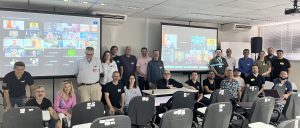 SA3CC 2026 Strengthens Global Astronomy and Research Network Collaboration
May 19-20, 2026
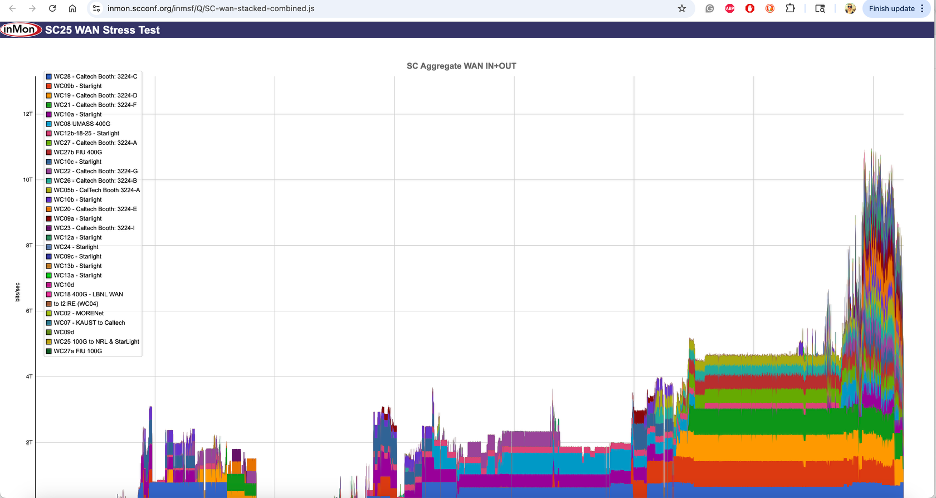
The 2026 South American–African Astronomy Coordination Committee (SA3CC) meeting, held in Fortaleza, Brazil, brought together representatives from leading international observatories, research institutions, and research and education networks across the Americas, Africa, Europe, and the United States. The event focused on coordinating the network infrastructure required to support data-intensive astronomy projects, including the Vera C. Rubin Observatory, ALMA, SKA, CTAO, ngVLA, and other major facilities. Through technical sessions, operational planning, and the Vera Rubin Observatory Network Engineering Team (NET) meeting, participants collaborated on advancing high-capacity international connectivity, monitoring, performance optimization, and long-term operational strategies to ensure reliable global scientific data exchange and support the next generation of astronomical discoveries … Read More
|
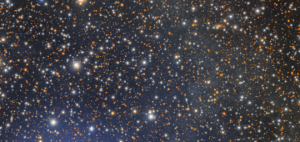 Action! NSF–DOE Vera C. Rubin Observatory Begins Capturing the Greatest Cosmic Movie Ever Made
June 30, 2026
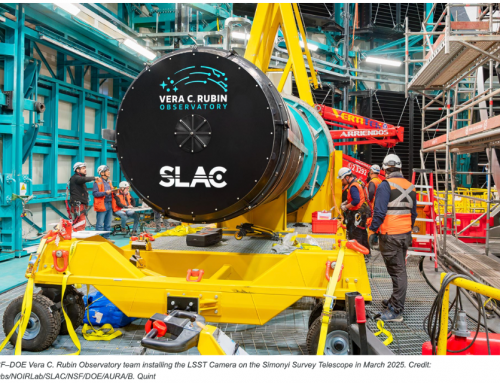
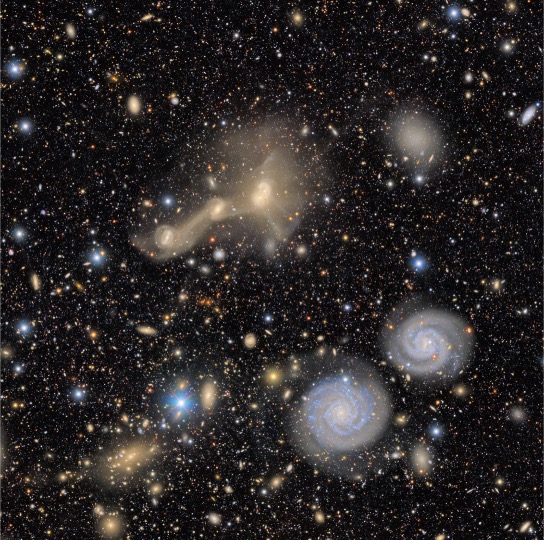
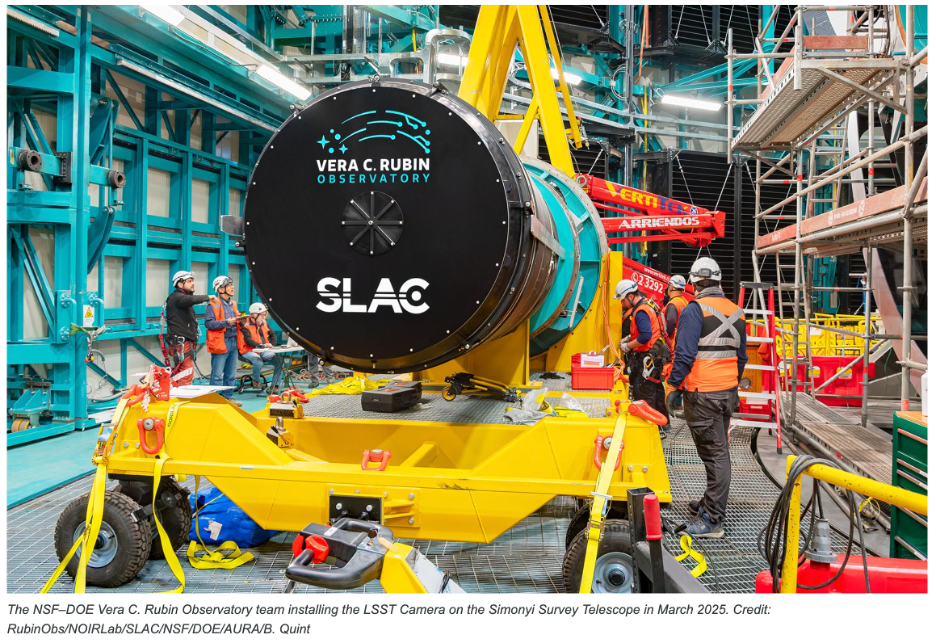
The 10-year Legacy Survey of Space and Time has officially started, marking the beginning of a new era in astronomy and astrophysics. The wait is over: NSF–DOE Rubin Observatory, funded by the U.S. National Science Foundation and the U.S. Department of Energy’s Office of Science, is now capturing the cosmos in unprecedented detail, transforming the way we study the dynamic Universe … Read More
|
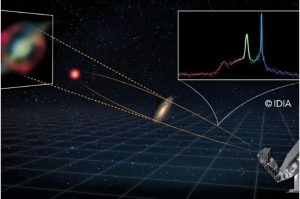 South African telescope detects record‑breaking signal from the early universe
June 13, 2026
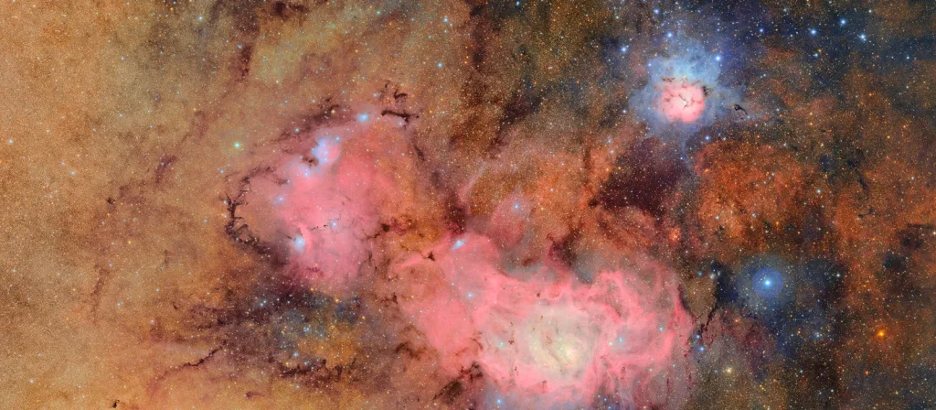
Astronomers using South Africa’s MeerKAT radio telescope discovered the most distant hydroxyl megamaser ever detected, originating from a merging galaxy more than 8 billion light-years away. Enabled by MeerKAT’s exceptional sensitivity, wide-band receivers, high-performance computing, and gravitational lensing, the discovery provides a powerful new tool for studying galaxy evolution, star formation, and supermassive black hole mergers in the early universe. The finding also highlights South Africa’s leadership in data-intensive radio astronomy and demonstrates the scientific potential of next-generation facilities such as the SKA Observatory to uncover the hidden history of the cosmos … Read More
|
 DOE Announces Initiative to Create and Deploy the World’s First Scientifically Relevant, Fault-Tolerant Quantum Computers
June 23, 2026
The U.S. Department of Energy announced the Quantum Genesis initiative, an ambitious program to develop the world’s first fault-tolerant, scientifically relevant quantum computer by 2028. As part of the broader Genesis Mission, the initiative will unite national laboratories, universities, and industry partners to advance quantum computing for applications in chemistry, materials science, plasma physics, high-energy physics, and artificial intelligence. By integrating quantum computing with high-performance computing and AI, Quantum Genesis aims to accelerate scientific discovery and reinforce U.S. leadership in next-generation computing technologies … Read More
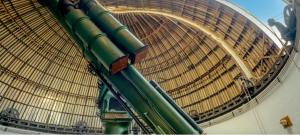
REUNA’s Chajnantor Point of Presence (PoP) has strengthened Chile’s position as a global hub for astronomy by providing high-capacity, low-latency connectivity for major observatories, including ALMA, AURA, and ESO. Through collaborations with international initiatives such as RedCLARA, the AmLight project, and BELLA, REUNA enables the rapid transfer of massive scientific datasets from the Atacama Desert to researchers worldwide. The Chajnantor PoP, supported by a resilient 100 Gbps backbone, plays a critical role in advancing global scientific collaboration and ensuring next-generation astronomical facilities have the reliable digital infrastructure needed for data-intensive discovery … Read More
June 23, 2026 RNP, in partnership with Rede-Rio/FAPERJ and the Brazilian Center for Physics Research, successfully deployed the first 100 Gbps network connection between the National Observatory and Oswaldo Cruz Foundation in Rio de Janeiro. The new high-capacity link, which provides ten times the bandwidth of traditional 10 Gbps connections, strengthens Brazil’s research cyberinfrastructure by enabling faster data transfers, supporting data-intensive scientific applications, and enhancing collaboration among research institutions. The milestone represents a major advancement in the modernization and resilience of Rio de Janeiro’s academic network, reinforcing RNP’s commitment to supporting cutting-edge science through advanced connectivity … Read More
May 18, 2026 The Smart Agro RAF LATAM initiative is leveraging blockchain technology and the advanced digital infrastructure of RedCLARA and its National Research and Education Networks (NRENs) to improve transparency, traceability, and market access for family farmers across Latin America. Supported by the BELLA II Early Adopters Blockchain Programme, the project enables secure digital certification and automated product traceability, helping small-scale producers access higher-value markets while strengthening food security, fostering regional collaboration, and accelerating the digital transformation of agriculture through innovative, scalable technologies … Read More
|